

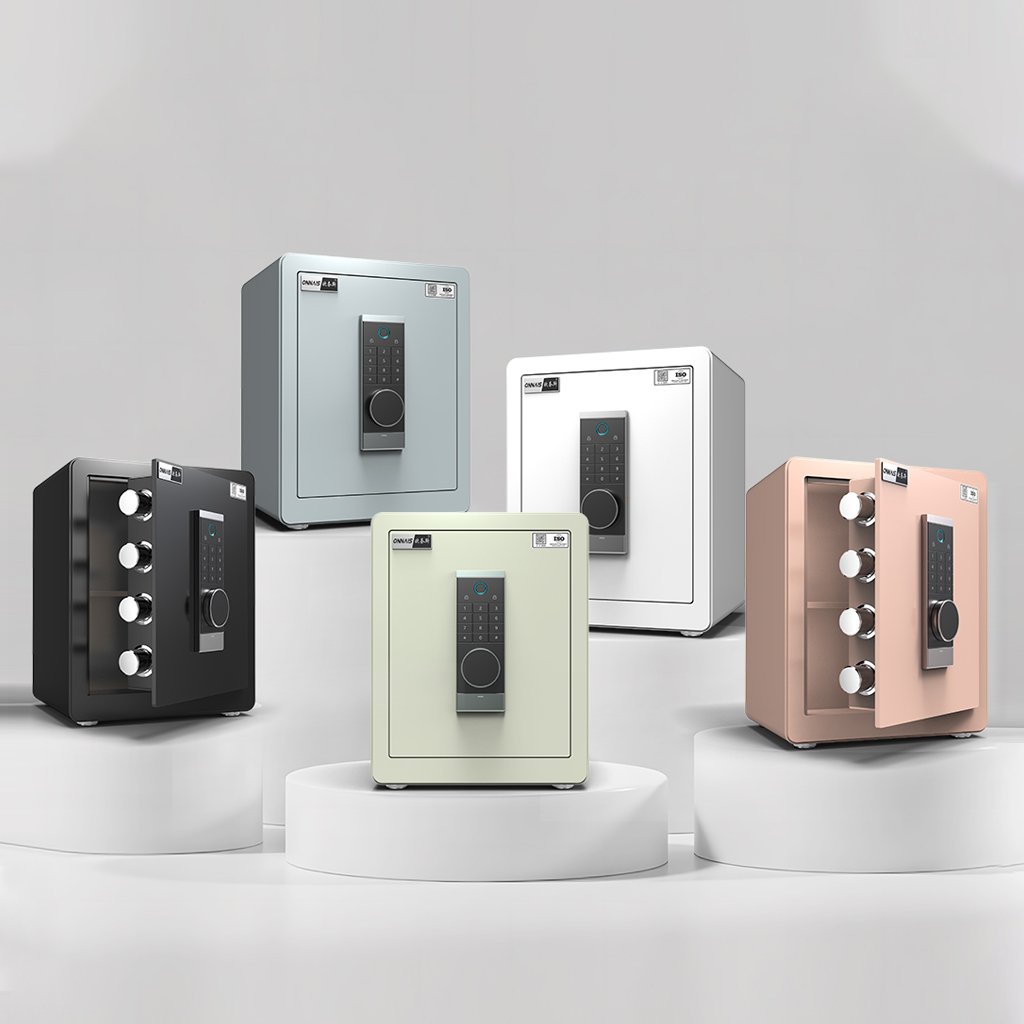
Choosing the right home safes is not only about security—it is about matching the safe to what you need to store, how often you need access, and where you plan to install it. A properly selected safe provides long-term protection for cash, documents, jewelry, electronics, and other valuables.
If you have not yet explored the full range of safe technologies and structures, you can first refer to our Home Safe Complete Guide for a full overview of types, construction, and security systems.
1. Start With What You Need to Store
The first and most important step is to identify what you will place inside the safe.
Common items include:
- Cash and banknotes
- Jewelry and watches
- Passports and identity documents
- Property papers and contracts
- Laptops or tablets
- Firearms (for regulated markets)
Different items require different internal space and organization. For example, documents require flat storage space, while jewelry requires compartments or trays.
2. Choose the Right Home Safes Size
Safe size is one of the most important buying decisions.
To avoid choosing the wrong size, we recommend reading our detailed guide on what size home safe do I need before making a purchase decision.
General size guide:
- Small Home Safes: Cash, jewelry, passports
- Medium Home Safes: Documents, electronics, family valuables
- Large Home Safes: Multi-user household storage
- Extra-Large Safes (70–80 cm): Office or business use, high-capacity storage
👉 Always choose slightly larger than your current need to allow future expansion.
3. Understand Home Safes Lock Types
Locking systems affect both convenience and security.
Key Lock
Simple and traditional access method.
Digital Keypad Lock
Common residential solution with password access.
Fingerprint Lock
Fast access for frequent use.
Compare full differences in our guide on fingerprint vs digital safe systems.
Smart Safe Systems
Advanced models with app-based or multi-mode access.
4. Consider Security Construction
A safe’s strength depends on its structure, not just the lock.
Key features include:
- Solid steel body construction
- Anti-pry door design
- Reinforced locking bolts
- Concealed hinges
- Internal locking mechanisms
If you want to understand real protection levels, see our guide on are home safes really secure.
5. Decide Where You Will Install It
Installation location affects both safety and usability.
Common locations:
- Bedroom wardrobe
- Closet or storage room
- Home office
- Hidden cabinet space
For better protection, safes should be anchored to walls or floors whenever possible.
👉 For detailed placement strategy, refer to where should you install a home safe.
6. Think About Daily Usage
Ask yourself:
- Will you access it daily or occasionally?
- Do multiple family members need access?
- Do you need fast unlocking (fingerprint) or controlled access (key/password)?
Higher frequency use usually requires faster unlocking systems.
7. Avoid Common Buying Mistakes
Many buyers choose the wrong safe due to lack of planning.
Common mistakes include:
- Choosing a safe that is too small
- Ignoring document size (A4 requirement)
- Forgetting installation space
- Not planning for future storage needs
- Selecting the wrong lock type
👉 See our detailed article on common home safe buying mistakes.
8. Home Safes for Families vs Apartments vs Offices
Different environments require different priorities.
Families
Medium to large safes are recommended for shared access and valuables.
Apartments
Compact safes are preferred due to limited space.
Offices / Business Use
Large capacity safes (70–80 cm range) are suitable for documents and cash handling.
👉 For more lifestyle-based guidance, see what should you store in a home safe.
Key Takeaways
Choosing the right home safe is about balancing three factors:
- What you store
- How you use it
- Where you install it
A properly selected safe is not just a storage product — it is a long-term security system for your valuables.
ONSTAR SAFE designs solutions for different needs, from compact home safes to large-capacity business storage safes, ensuring there is always a suitable option for every application.