

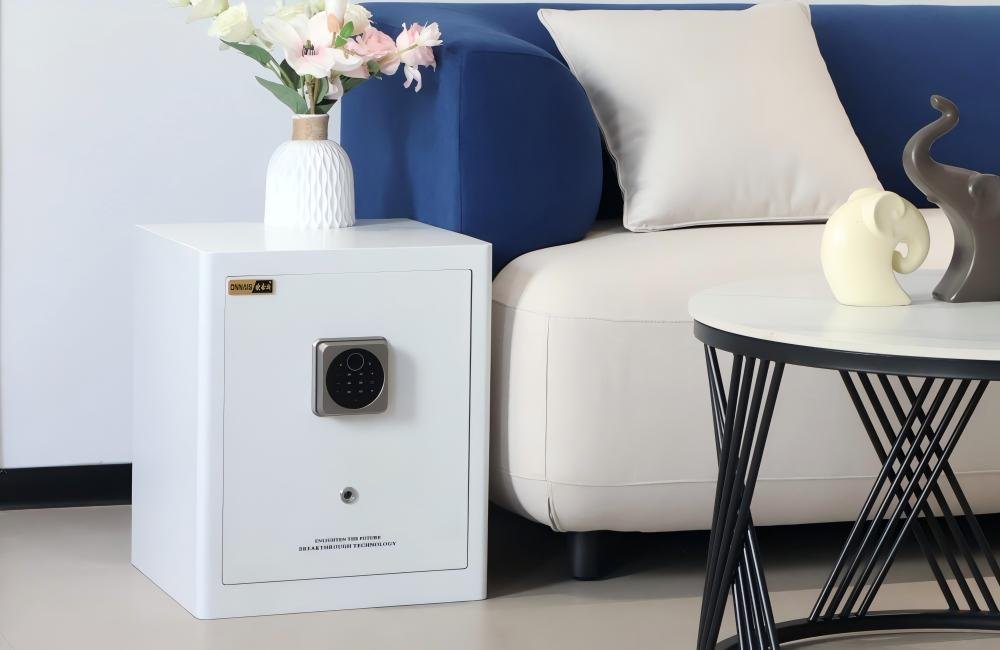
Buying a home safe may seem simple, but choosing the right model requires careful consideration of size, steel construction, locking systems, installation, and intended use. If you are still comparing different options, our complete home safe buying guide explains the key factors to consider before making a purchase.
Whether you are buying a safe for your home or sourcing products for your business, it is important to look beyond the product’s appearance and price.
In this guide, we explain seven common home safe buying mistakes and what you should consider before making a purchase.
1. Choosing a Home Safe Based Only on Price
Price is an important factor when buying a home safe, but it should not be the only consideration.
A lower-priced safe may use thinner materials, a simpler internal structure, or lower-cost locking components. These differences may not be obvious from product photos, but they can significantly affect the overall strength and reliability of the safe.
Before comparing prices, buyers should consider:
- Steel construction
- Door and body design
- Locking bolt structure
- Lock quality
- Internal reinforcement
- Manufacturing quality
- Installation options
The cheapest home safe is not always the best value. A quality safe should provide a balance between security, reliability, functionality, and price.
For distributors and importers, this is particularly important. A product that is inexpensive to purchase but has poor quality may result in customer complaints, returns, and damage to your brand reputation.
2. Choosing the Wrong Size
Another common mistake is buying a home safe that is too small.
Many buyers only consider the items they need to store today. However, the contents of a safe may increase over time. Important documents, passports, jewelry, cash, watches, and other valuables may gradually take up more space.
Before choosing a safe, consider what you plan to store, such as:
- Passports and identity documents
- Property documents
- Cash
- Jewelry and watches
- Important contracts
- Digital storage devices
- Family heirlooms
It is often better to choose a safe with a little extra internal space rather than buying a model that becomes too small after a short period of use.
For businesses, different customer groups may also require different sizes. A professional home safe factory supplier should be able to provide a range of sizes and models for different markets and applications.
3. Focusing Only on the Lock Type
Fingerprint, keypad, electronic, and mechanical locks all have different characteristics. However, many buyers make the mistake of choosing a safe based only on the lock type.
For example, a fingerprint safe may offer convenient access, while a digital keypad safe may provide simple operation. However, the lock is only one part of the complete security system.
A reliable home safe should also have:
- Strong steel construction
- A secure locking mechanism
- Properly designed locking bolts
- A strong door structure
- A well-fitted door
- Reliable manufacturing quality
A smart lock cannot compensate for a weak safe body.
When choosing a home safe, buyers should evaluate the complete product rather than focusing on a single feature.
4. Ignoring the Safe’s Steel Construction
The physical construction of a safe is one of the most important factors to consider.
A safe is designed to protect valuable belongings through its complete physical structure. Therefore, buyers should pay attention to the materials and construction methods used during manufacturing.
Important questions include:
- What type of steel is used?
- How is the safe body formed?
- How is the door constructed?
- Is the body strong and rigid?
- How are the internal components reinforced?
- Are the joints and welds properly manufactured?
A quality home safe begins with a strong physical structure.
For buyers sourcing products from overseas, working directly with an experienced China home safe manufacturer can provide better visibility into the manufacturing process, materials, production capabilities, and quality control procedures.
5. Buying a Safe Without Considering Installation
Even a strong home safe should be installed properly.
A safe that is easy to remove from its location may create additional security risks. Therefore, buyers should consider how and where the safe will be installed before purchasing.
Depending on the model, installation may involve:
- Concrete floors
- Concrete walls
- Cabinets
- Bedrooms
- Offices
- Other suitable fixed locations
Before purchasing a home safe, check whether the product includes suitable anchoring options.
For larger or heavier models, it is also important to plan the installation location in advance. Consider the available space, access route, floor structure, and the method of fixing the safe.
The right safe should not only protect its contents—it should also be suitable for its intended installation environment.
6. Assuming Every Digital Safe Is the Same
Digital home safes are becoming increasingly popular because they offer convenient access and modern features. However, not all digital safes are the same.
Buyers should consider the reliability and design of the complete electronic system.
Depending on the product, important questions may include:
- Is the keypad reliable?
- Is there an emergency power solution?
- Is there a backup access method?
- Is the fingerprint sensor reliable?
- Has the electronic system been tested?
- Is the system suitable for long-term use?
For smart or biometric home safes, buyers may also consider additional functions such as mobile applications, remote management, access records, and other smart features.
However, advanced electronic functions should work together with a strong physical structure.
The best home safe is not necessarily the one with the most features. It is the one that provides the right combination of security, reliability, convenience, and practical functionality.
7. Ignoring the Manufacturer
Many buyers focus on the product image, features, and price while ignoring the manufacturer behind the product.
However, the manufacturer can have a significant impact on product quality and long-term cooperation.
A professional home safe manufacturer should have:
- Stable production capabilities
- Experienced technical teams
- Quality control procedures
- Product testing capabilities
- Consistent manufacturing standards
- OEM and ODM capabilities
- Reliable production capacity
For distributors, importers, wholesalers, and private-label brands, choosing the right home safe factory supplier is particularly important.
A professional factory supplier can help with:
- Product selection
- Product customization
- Logo and branding
- Packaging design
- Product development
- OEM production
- ODM projects
- Quality control
For businesses looking for long-term cooperation, visiting or evaluating the production capabilities of a China home safe manufacturer can provide valuable information before placing a large order.
What Should You Check Before Buying a Home Safe?
Before purchasing a home safe, consider the following checklist:
✔ Check the physical construction
Look at the steel body, door structure, locking mechanism, and overall product quality.
✔ Choose the right size
Consider both your current storage requirements and possible future needs.
✔ Evaluate the complete locking system
Do not choose a safe based only on whether it has a fingerprint, digital, or mechanical lock.
✔ Consider installation
Check where and how the safe will be installed and whether suitable anchoring options are available.
✔ Review the manufacturer’s capabilities
For B2B buyers, evaluate the factory’s production capacity, quality control, OEM/ODM experience, and ability to provide consistent quality.
✔ Compare long-term value
A reliable home safe may provide better long-term value than a low-cost product with limited durability or inconsistent quality.
Final Thoughts: Choosing a home safe should involve more than comparing product photos and prices.
The most common buying mistakes include choosing based only on price, selecting the wrong size, focusing only on the lock type, ignoring the steel construction, overlooking installation, assuming all digital safes are the same, and failing to evaluate the manufacturer.
A good buying decision should consider the complete product:
Steel construction + locking system + size + installation + reliability + manufacturing quality.
For homeowners, these factors can help you choose a home safe that better matches your security needs.
For distributors, importers, and private-label brands, working with a reliable home safe factory supplier can provide better opportunities for product customization, OEM/ODM cooperation, and long-term business growth.
The right home safe is not necessarily the cheapest product or the one with the most advanced technology. It is the product that provides the right balance of physical security, reliable technology, practical design, and consistent manufacturing quality.
FAQ
What is the most common mistake when buying a home safe?
One of the most common mistakes is choosing a home safe based only on price or lock type. Buyers should also consider the steel construction, locking mechanism, size, installation, and overall manufacturing quality.
Is a digital home safe better than a
home safe
?
Not necessarily. Digital and mechanical safes have different advantages. The most important factor is the overall quality and reliability of the complete safe, including its physical construction and locking system.
What size home safe should I buy?
The right size depends on what you plan to store. It is generally advisable to consider your future storage needs instead of choosing a safe that only fits your current belongings.
How do I choose a home safe factory supplier?
Look for a supplier with stable production capacity, quality control procedures, product development experience, OEM/ODM capabilities, and consistent manufacturing standards.
Why work with a China home safe manufacturer?
A professional China home safe manufacturer may provide a wider range of products, competitive production capabilities, OEM/ODM services, and customization options for distributors, importers, and private-label brands.