

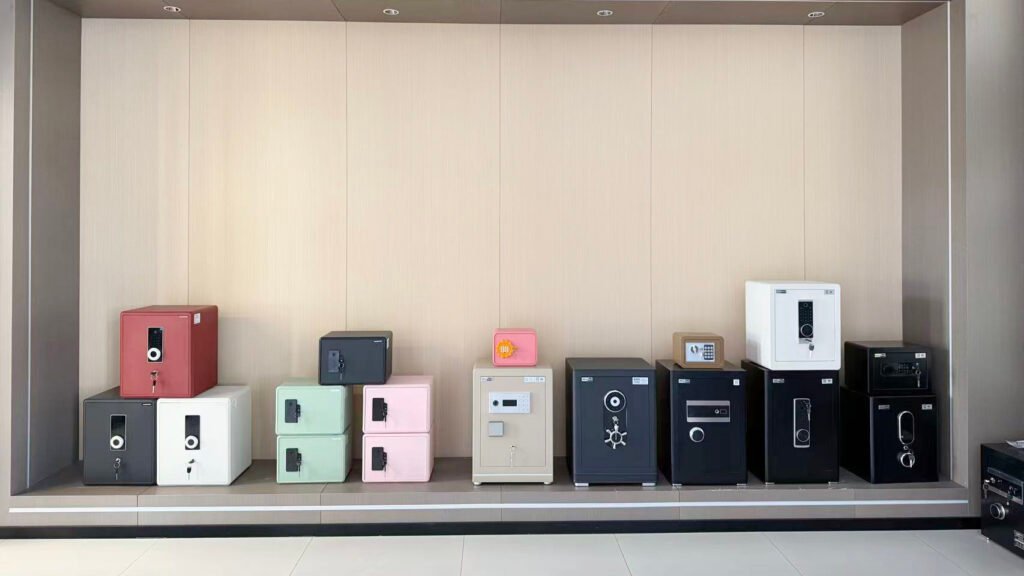
Choosing a home safe for an e-commerce business is different from choosing one for personal use. As an online retailer, you need to consider not only security and product features, but also product size, weight, packaging, shipping costs, selling price, customer expectations, and return risks.
The right home safe for an e-commerce business is not necessarily the best home safe for an end user. A product may offer excellent security features, but if it is too heavy to ship, difficult to install, poorly packaged, or too expensive for your target market, it may be difficult to sell profitably online.
This guide explains the key factors that online retailers, Amazon sellers, distributors, and e-commerce brands should consider when selecting home safe products for their business.
1. Understand Your Target Market
Before choosing a home safe, determine who you plan to sell to and what they expect from the product.
Different markets may have different preferences for safe size, locking systems, appearance, security features, and price. For example, customers looking for a compact home safe for documents and small valuables may prefer a lightweight model, while customers looking for a larger home security safe may expect more storage space, stronger construction, and additional security features.
For e-commerce businesses, it is also important to consider how the product will be presented and sold online.
Ask yourself:
- Who is the target customer?
- What items will they typically store in the safe?
- What safe sizes are suitable for this market?
- What locking system do customers prefer?
- What price range is competitive?
- How much shipping cost can the product support?
- Does the product need to be easy for customers to install?
- Which features are important enough to influence an online purchase?
Understanding these factors before selecting a product can help you avoid choosing a safe that looks attractive in a factory catalog but is difficult to sell in your target market.
For online retailers, the goal is not simply to find a secure home safe. The goal is to find a home safe product that meets customer expectations and also makes commercial sense for your business.
2. Choose the Right Home Safe Size
Product size is one of the first factors to consider when selecting home safes for e-commerce.
A larger safe provides more storage capacity, but it usually also means higher product weight, larger packaging, higher shipping costs, and greater difficulty for customers to move and install the product.
For this reason, the largest available model is not always the best choice for an online retail product line.
You can consider offering a focused range of sizes:
- Small home safes – suitable for documents, cash, jewelry, passports, and other small valuables.
- Medium home safes – suitable for customers who need more storage space for household valuables and important documents.
- Large home safes – suitable for customers who need higher capacity and stronger security for larger quantities of valuables.
When selecting sizes, consider both the internal storage capacity and the external dimensions. Internal dimensions determine what customers can store, while external dimensions affect packaging, transportation, installation, and the amount of space required in the customer’s home.
For e-commerce sellers, also check whether the packaged product can be handled efficiently through your target logistics and fulfillment channels.
3. Select the Right Locking System
The locking system is one of the most visible features of a home safe and can strongly influence a customer’s purchasing decision.
Common options include:
- Electronic keypad locks
- Fingerprint locks
- Mechanical combination locks
- Key locks
- Electronic locks with emergency override keys
- Combination locking systems
The best option depends on your target market and product positioning.
For example, an electronic keypad can provide convenient everyday access, while fingerprint access may appeal to customers looking for faster entry. Mechanical combination locks may be suitable for customers who prefer a system that does not require batteries.
For e-commerce businesses, product information about the lock should be clear and accurate. Customers should understand how the lock works, how it is powered if applicable, and what happens if the battery is depleted.
Clear product information can help reduce customer confusion, negative reviews, and unnecessary returns.
4. Consider Security and Construction
Security is naturally one of the most important factors when selecting a home safe. However, e-commerce sellers should look beyond a single specification such as steel thickness.
Consider the overall construction of the product, including:
- Steel construction
- Door design
- Locking bolts
- Hinge design
- Anti-pry features
- Internal storage layout
- Mounting holes or anchoring options
- Overall product weight and stability
The right specifications depend on the intended market and product positioning.
It is also important to make sure that all security claims used in product listings are supported by actual product specifications or applicable testing and certification.
For example, if a product has not been tested for a particular fire-resistance or security standard, avoid making claims that could create unrealistic customer expectations.
For online retailers, accurate product information is particularly important because customers usually cannot inspect the safe physically before purchasing it.
5. Think About Installation
Installation is another factor that can affect customer satisfaction.
Some home safes are designed to be placed on a shelf or inside a cabinet, while larger models may need to be secured to a floor, wall, or another suitable structure.
If the safe is designed for anchoring, consider:
- Mounting hole locations
- Installation instructions
- Included or optional mounting hardware
- Suitable installation surfaces
- Accessibility after installation
Installation requirements should be clearly explained on the product page.
This is especially important for larger and heavier safes. A product that is difficult to install may lead to customer complaints or returns even if the safe itself performs well.
Providing clear installation instructions, diagrams, and videos can help improve the customer experience.
6. Packaging Is Especially Important for E-commerce
Packaging deserves special attention when choosing home safe products for online sales.
Unlike traditional wholesale shipments, e-commerce products may pass through multiple handling points before reaching the end customer. The packaging therefore needs to protect the product during transportation while also being practical for shipping and storage.
Consider the following:
- Carton strength
- Internal protection
- Corner protection
- Protection for the door and locking system
- Product movement inside the carton
- Pallet requirements
- Package dimensions
- Package weight
- Ease of handling
A damaged carton can result in a damaged product, customer complaints, negative reviews, and additional return or replacement costs.
For e-commerce businesses, packaging should therefore be considered part of the product, rather than simply an afterthought.
It is also useful to request packaging specifications from your home safe manufacturer before placing an order. Compare both the product dimensions and the final packed dimensions, because the difference can significantly affect transportation costs.
7. Check Product Weight and Shipping Costs
Product weight is particularly important for online retailers.
A heavier safe may provide a stronger and more stable product, but it can also increase transportation and fulfillment costs.
Before selecting a model, calculate the complete logistics cost rather than looking only at the factory price.
A basic calculation can include:
Total Landed Cost = Product Cost + Packaging + Freight + Duties/Taxes + Fulfillment Costs + Other Marketplace Costs
For example, two home safes may have similar factory prices, but the heavier model may have significantly higher shipping and fulfillment costs.
Also consider the dimensions of the packaged product. In some logistics systems, package size can affect the shipping charge even when the actual product weight is not particularly high.
For e-commerce sellers, the goal is to find a balance between product quality, security, shipping efficiency, and selling price.
8. Consider Selling Price and Product Positioning
Before selecting a home safe, determine where the product will sit in your target market.
You may choose to focus on:
- Entry-level home safes
- Mid-range home safes
- Premium home safes
- Specialized home security safes
Each position requires a different combination of product specifications, appearance, packaging, and pricing.
An entry-level product may focus on affordability and basic security features. A mid-range model may offer upgraded locking systems, better construction, and more convenient features. A premium product may require stronger construction, higher-end finishes, advanced locking technology, or additional certifications.
Avoid adding features simply because they are available.
Every additional feature can affect product cost, assembly, packaging, quality control, and customer support. Select features that have a clear value for your target market.
9. Product Appearance Matters Online
Customers cannot physically inspect a home safe before purchasing it online. Product appearance therefore plays an important role in the buying decision.
Consider:
- Overall design
- Surface finish
- Color
- Control panel design
- Handle design
- Interior layout
- Product proportions
- Product photography
A clean and modern appearance can help a home safe fit better into contemporary homes.
For e-commerce listings, high-quality product images are also important. Consider showing:
- Front view
- Side view
- Interior
- Locking system
- Door and bolts
- Mounting points
- Dimensions
- Packaging
- Installation method
Clear images can reduce uncertainty and help customers understand what they are purchasing.
10. Consider Certifications and Market Requirements
Different countries and markets may have different requirements for home safes and related products.
Before selecting a product, check whether your target market requires or expects specific certifications, testing, or documentation.
Depending on the product and market, you may need to consider requirements related to:
- Product safety
- Electrical components
- Electromagnetic compatibility
- Security performance
- Fire resistance
- Environmental requirements
- Packaging and labeling
Do not assume that a certification used in one market automatically applies to another.
If you are selling through a major marketplace or importing into a particular country, check the applicable requirements before placing a large order.
A professional home safe manufacturer should be able to provide available certifications, test reports, product specifications, and other relevant technical documents.
11. Choose a Manufacturer That Supports E-commerce
Choosing the right manufacturer is just as important as choosing the right safe model.
For e-commerce businesses, a suitable home safe manufacturer should be able to support more than basic production.
Consider whether the manufacturer can provide:
OEM and ODM Services
OEM and ODM support can allow you to customize:
- Product design
- Logo
- Color
- Locking system
- Interior configuration
- Packaging
- Product specifications
- User manuals
This can help you create a product range that is better suited to your target market.
Flexible MOQ
If you are testing a new product, a lower initial MOQ can reduce inventory risk.
After the product has been tested in the market, you can increase the order volume based on actual sales performance.
Quality Control
Ask how the manufacturer controls quality during production.
Important areas may include:
- Raw material inspection
- Welding quality
- Surface treatment
- Lock installation
- Assembly
- Functional testing
- Final inspection
- Packaging inspection
Consistent quality is particularly important for e-commerce because product reviews can have a direct impact on future sales.
Stable Lead Time
Lead time should also be considered when planning inventory.
Ask the manufacturer about:
- Sample lead time
- Production lead time
- Packaging lead time
- Inspection arrangements
- Shipping preparation
A reliable supply chain can help you maintain inventory and avoid unnecessary stockouts.
12. Start With a Focused Product Range
You do not necessarily need dozens of home safe models when entering a new market.
A focused product range can be easier to manage.
For example, you could start with:
- One compact home safe
- One medium-size home safe
- One larger home safe
You can then test customer demand and identify which sizes, locking systems, colors, and price points perform best.
Once you understand the market, you can expand the product range based on actual sales data.
This approach can reduce inventory risk and make product management easier.
13. Think About Returns and After-Sales Support
Returns can have a significant impact on e-commerce profitability.
A home safe may be returned because of:
- Product damage during shipping
- Incorrect product expectations
- Difficulty opening or operating the lock
- Missing accessories
- Installation problems
- Incorrect dimensions
- Packaging damage
Many of these problems can be reduced before the product is launched.
Make sure your manufacturer provides accurate specifications, clear instructions, reliable packaging, and appropriate quality control.
It is also useful to discuss after-sales support before placing an order. For example, ask whether the manufacturer can provide replacement locks, keys, electronic components, mounting hardware, or other spare parts when needed.
14. Questions to Ask a Home Safe Manufacturer
Before selecting a supplier, ask the following questions:
- What home safe models are suitable for my target market?
- What are the product and package dimensions?
- What is the net and gross weight?
- What locking systems are available?
- Can the logo and packaging be customized?
- Can the product specifications be modified?
- What is the MOQ?
- What is the sample lead time?
- What is the standard production lead time?
- What quality control procedures are used?
- What certifications or test reports are available?
- What mounting options are available?
- What spare parts can be supplied?
- Can you provide OEM or ODM services?
- Can you support long-term e-commerce product development?
The answers can help you compare manufacturers based on more than just the initial quotation.
15. Home Safe OEM and ODM for E-commerce Businesses
For online retailers and e-commerce brands, working directly with a home safe manufacturer can provide more flexibility than simply purchasing standard products.
OEM and ODM services can support different business requirements, including customized product specifications, branding, packaging, locking systems, colors, and product configurations.
At Onstar Safe, we support OEM and ODM cooperation for businesses looking to develop home safe products for different markets and sales channels.
Whether you are an online retailer, Amazon seller, distributor, or established e-commerce brand, the product can be developed according to your target market, positioning, and business requirements.
If you are planning a new home safe product line, you can contact our team to discuss product specifications, customization options, MOQ, packaging, and production requirements.
Conclusion
Choosing a home safe for an e-commerce business requires more than comparing security features and factory prices.
A successful product needs to balance security, size, weight, packaging, shipping costs, appearance, customer expectations, selling price, and product quality.
The best home safe for your business is not necessarily the most advanced or the most expensive model. It is the product that fits your target market, can be shipped efficiently, meets customer expectations, and provides a sustainable business margin.
By working with an experienced home safe manufacturer that can provide OEM and ODM support, you can develop products that are better suited to your market and build a more reliable long-term product line.
Related Guides
- The Complete Guide to Home Safes: Types, Construction, Locking Systems, and Security Features
- How to Choose the Right Home Safes: Complete Buying Guide
- What Size Home Safe Do I Need?
Looking for a Home Safe Manufacturer?
If you are looking for a reliable home safe manufacturer for your e-commerce business, Onstar Safe can support OEM and ODM projects from product development and customization to production and packaging.